Measurement & Testing Systems
MagHyst® for Monitoring and Diagnostics of Solenoid Valves
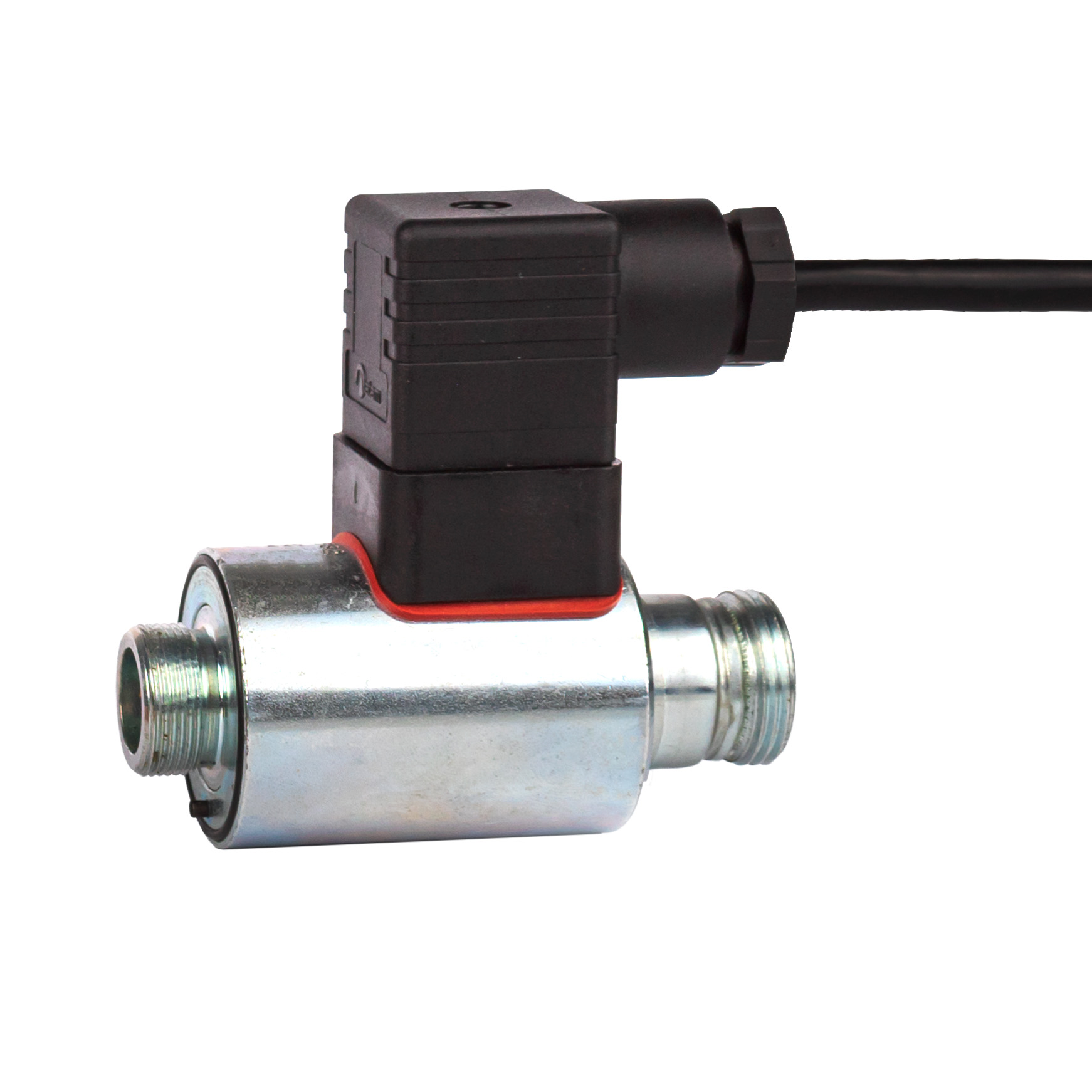
Every electromagnetic valve, whether it is a hydraulic or pneumatic switching valve, a proportional valve, or a valve used in coffee machines, vehicles, industrial systems, or power plants, possesses unique intrinsic sensing properties. MagHyst® technology is specifically designed to leverage these properties.
The objective is both simple and revolutionary: to capture and analyze all relevant information about the quality, condition, and hidden defects of an electromagnetic valve without the need for additional sensors.
Just as an electrocardiogram (ECG) reveals the health of the human heart, MagHyst® can identify virtually all relevant fault conditions and deviations within an electromagnetic valve in a matter of seconds, during development, production, and throughout its operational lifetime.
This fundamental principle creates unique advantages for both manufacturers and operators of electromagnetic valves. Manufacturers gain powerful tools for optimizing development, calibration, assembly, testing, and production processes, thereby establishing the foundation for defect-free products from the outset. Operators, for the first time, can continuously or periodically assess the actual "health condition" of safety-critical and function-critical valves throughout their service life.
Read more
Rethinking Quality Assurance
Electromagnetic valves are generally regarded as highly reliable components. However, even with optimized designs, high-precision manufacturing, automated assembly, and 100% end-of-line testing, a residual risk of manufacturing, material, or assembly defects always remains.
Reducing scrap, customer complaints, and unnecessary testing costs is a key objective for every modern company. At the same time, requirements for quality, traceability, and process reliability continue to increase.
Today, a wide range of testing methods is used for quality assurance. In most cases, electrical, magnetic, mechanical, hydraulic, and pneumatic properties are evaluated separately. This often results in complex test systems, long testing times, and high investment costs.
MagHyst® technology was specifically developed to address these challenges. It can be applied throughout the entire value chain, from development and in-line testing to end-of-line testing, lifetime investigations, and field condition monitoring.
In many applications, MagHyst® not only replaces existing testing methods but also simplifies them significantly while enabling entirely new diagnostic capabilities.
The Electromagnetic Valve as an Integrated System
Electrical Subsystem
Potential fault conditions include:
- Shorted turns within the coil winding
- Coil manufacturing defects
- Insulation degradation and aging effects
- Electrical contact issues
Magnetic Subsystem
Potential fault conditions include:
- Variations in magnetic material properties
- Differences between material batches
- Effects of mechanical processing on magnetic performance
- Changes caused by heat treatment
- Unsuitable or defective magnetic materials
Mechanical Subsystem
In practice, the mechanical subsystem represents the most common source of faults.
Typical causes include:
- Increased friction
- Wear of moving components
- Sticking or restricted armature movement
- Assembly defects
- Damaged guides
- Defective elastomers and seals
- Spring deviations
- Contamination and particulate matter
As valve complexity increases, the number of potential fault sources grows significantly. Additional springs, guide bushings, diaphragms, seals, and highly integrated designs place greater demands on manufacturing, assembly, and quality assurance.
Many valves also require precise adjustment processes, for example for:
- Armature air gaps
- Spring forces
- Magnetic forces
- Selective component assembly
Even minor deviations can affect valve performance and service life.
One Measurement – Maximum Information
MagHyst® technology enables the detection and analysis of most fault conditions through a single measurement performed within seconds.
The measurement system is simply connected to the electrical terminals of the solenoid coil. Additional sensors, disassembly procedures, or mechanical modifications are generally not required.
Depending on the diagnostic objective, the coil is actively energized during testing. During one or more switching cycles, electrical parameters are measured with high precision and used to determine the magnetic characteristic of the valve.
This characteristic contains information about the condition of all subsystems within the electromagnetic valve.
As a result, numerous mechanical and functional properties can be derived from purely electrical measurements, including:
- Absolute armature position
- Open and closed valve states
- Full stroke verification
- Dynamic movement behavior
- Uniformity of armature motion
- Friction and wear
- Sticking or blockage
- Contamination
- Changes in seals and elastomer components
- Aging effects
In addition, external influences affecting switching behavior can also be detected, including:
- Pressure variations
- Temperature changes
- Viscosity changes of hydraulic media
- Flow rate variations
- Vibrations
- Process-related load fluctuations
Pure sealing or leakage issues cannot, by their nature, be measured directly. However, if they lead to mechanical changes within the valve, the resulting effects become immediately visible in the MagHyst® measurement.
From Actuator to Sensor
With MagHyst®, the electromagnetic valve itself becomes the sensor.
During every switching operation, the valve provides information about its current condition while simultaneously documenting the influence of real operating conditions.
As a result, the valve becomes a valuable source of information for:
- Quality control
- Process monitoring
- Fault diagnostics
- Condition monitoring
- Predictive maintenance
- Lifetime and durability analysis
Instead of simply distinguishing between "OK" and "NOK," MagHyst® enables identification of the actual root cause of a fault.
Diagnosis alone is no longer sufficient, the technology also provides insight into why a fault occurred.
Key Benefits at a Glance
- No additional sensors required
- Non-destructive testing
- Measurements completed within seconds
- Applicable during development, production, and operation
- In-line, end-of-line, and endurance testing with a single technology
- Detection of electrical, magnetic, and mechanical fault conditions
- Root cause analysis instead of simple pass/fail evaluation
- Reduced testing effort and lower testing costs
- Improved product quality and process reliability
- Foundation for predictive maintenance and condition monitoring
MagHyst® provides an entirely new perspective on electromagnetic valves. What was once considered a simple actuator becomes an intelligent source of information about its own condition. This creates new opportunities for quality assurance, process optimization, and reliability, from the first prototype to the final switching cycle in the field.