Measurement & Testing Systems
MagHyst® for Electromagnetic Brakes and Clutches
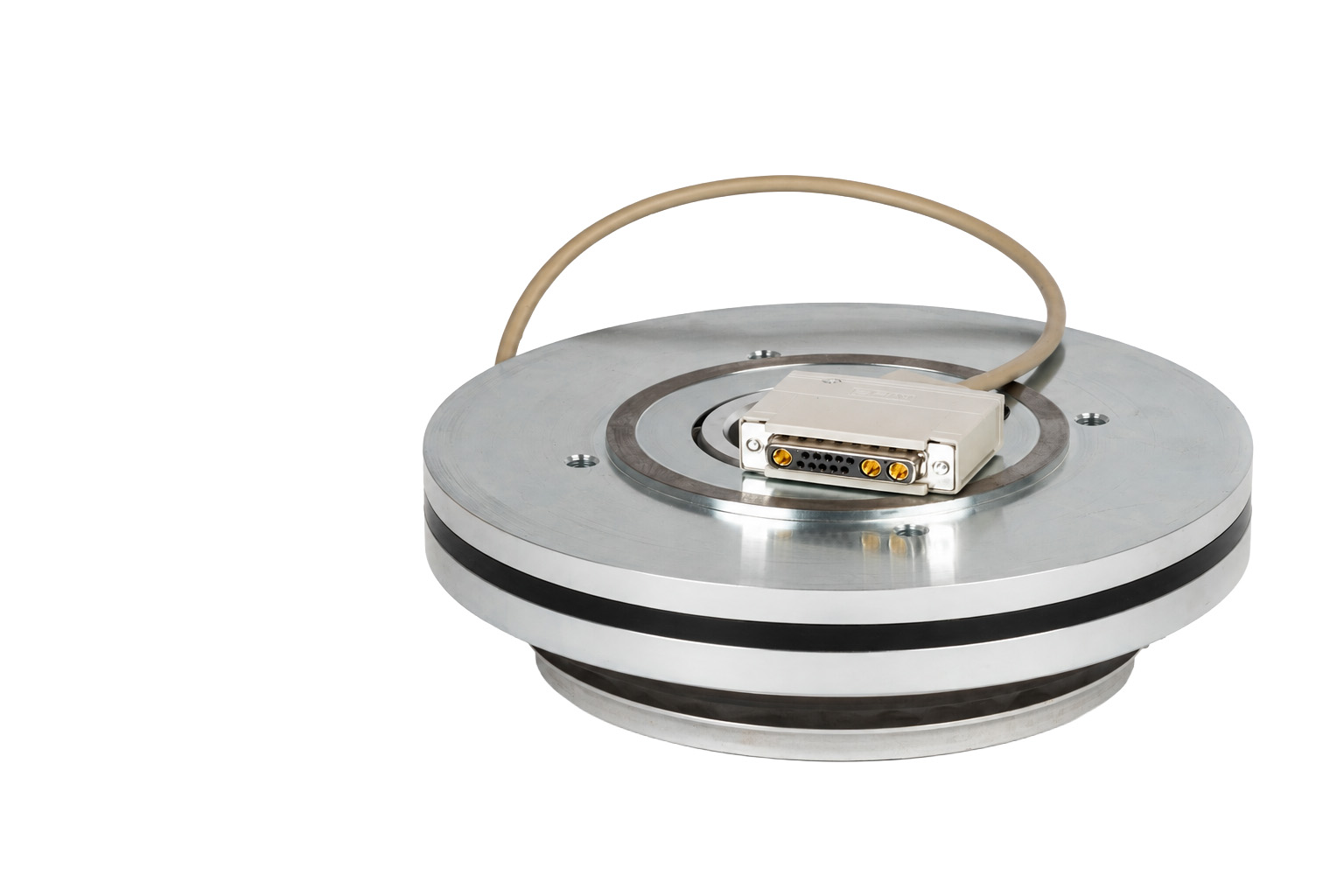
Electromagnetic brakes represent a distinct class of switching electromagnetic systems. A characteristic feature of these assemblies is the use of a flat armature that, in combination with a friction interface, provides the braking function.
In principle, two main brake designs can be distinguished:
- Spring-applied brakes (normally closed / de-energized engaged)
- Permanent magnet brakes (polarized brakes)
The most common type is the electromagnetic disc brake, whereas brakes designed for linear motion are used comparatively less frequently. Typical applications are found in industrial automation, particularly on vertical axes (Z-axes), where a reliable holding function is essential. Brakes used in hoisting and lifting systems also represent a classic field of application.
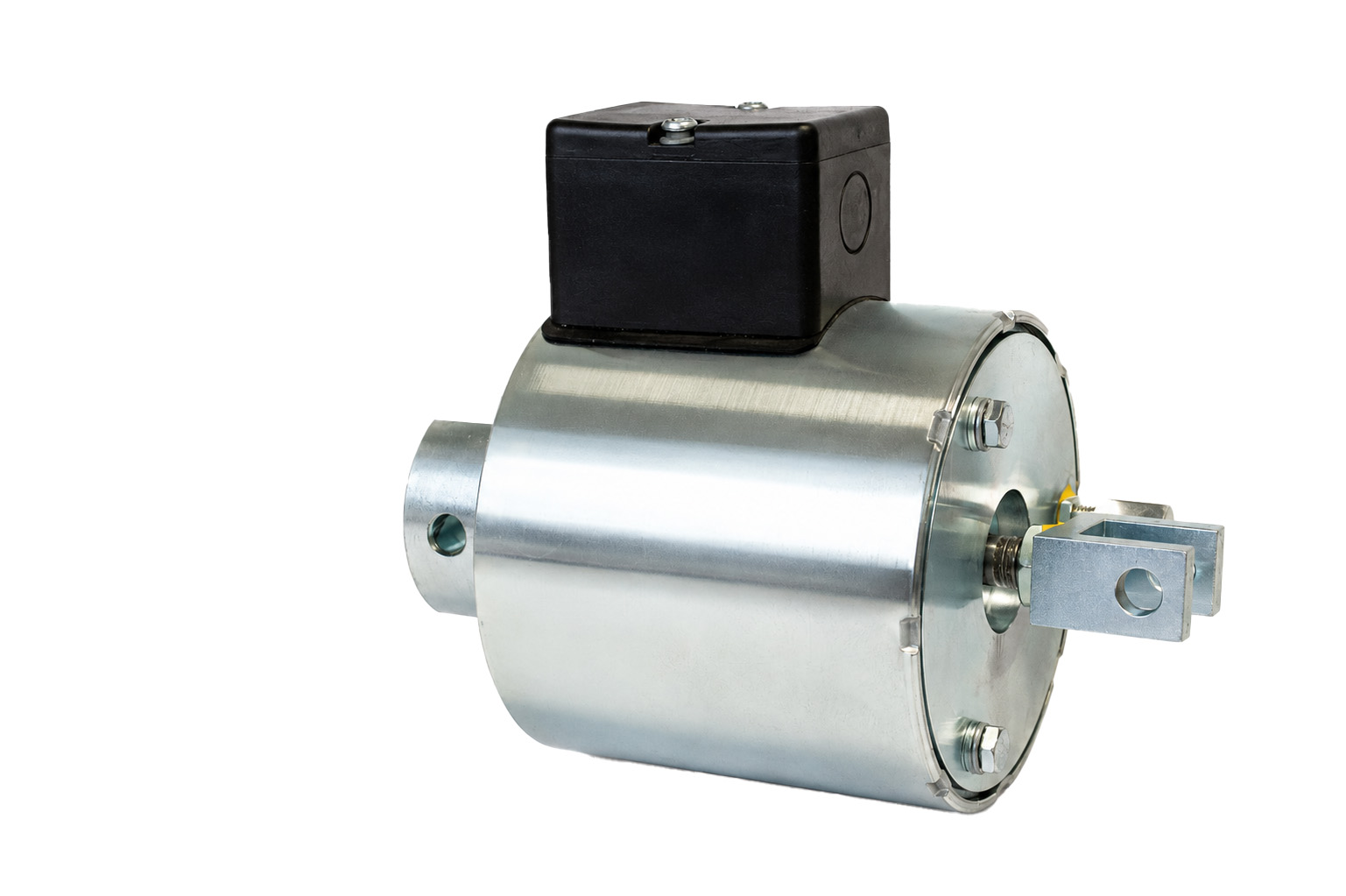
In older elevator installations, drum-brake systems can still be found in which brake actuation is performed by conventional plunger-type electromagnets. Depending on the design, single or double expanding magnets with one or more magnetic coils are used.
The quality assurance and condition assessment of all electromagnetic brake and clutch systems can be performed quickly, non-destructively, and without additional sensors using MagHyst® measurement systems.
Read more
Quality Assurance Throughout the Entire Product Life Cycle
The vast majority of electromagnetic brakes do not operate as actively actuated service brakes but instead serve as safety or holding brakes. As a result, the friction linings are exposed to significantly lower loads and wear rates compared to conventional service brakes.
Nevertheless, long operating lifetimes inevitably lead to changes in key system parameters.
The most important influencing factors include:
- Wear of friction linings and brake discs
- Changes in the air gap
- Variations in pull-in and release times
- Changes in magnetic force
- Variations in current consumption
- Aging of mechanical components
These changes have a direct impact on the performance and reliability of the braking system.
A Single Measurement – Comprehensive System Evaluation
MagHyst® technology provides a wide range of capabilities for the quality assurance and condition assessment of electromagnetic brakes.
Like any electromagnetic system, a brake incorporates numerous design-specific characteristics that must be monitored throughout development, manufacturing, and end-of-line testing. To ensure compliance with the required braking torque specifications, a variety of individual tests and measurements are often performed.
If an electromagnetic brake fails to achieve its specified braking torque, a number of root causes may be responsible, including:
- Insufficient magnetic force
- Incorrect air gap dimensions
- Spring-related issues
- Material variations
- Assembly defects
- Wear-related effects
- Aging of magnetic components
With a single MagHyst® measurement, the complete electromagnetic-mechanical system can be analyzed. This allows root causes to be identified directly or, at the very least, the range of possible causes to be narrowed down significantly within seconds.
Certain purely tribological defects, such as an oil-contaminated friction surface with otherwise unchanged mechanical characteristics, cannot naturally be detected directly. However, significant wear of friction elements, changes in the air gap, and the resulting effects on the electromagnetic system become immediately visible.
Detection of Typical Brake Faults
The integral magnetic characteristic of an electromagnetic braking system contains information about a wide range of potential fault conditions.
These include, among others:
- Wear of friction linings
- Changes in the air gap
- Deformation or runout errors of brake discs
- Issues related to anti-remanence coatings
- Insufficient remanence reduction due to design-related factors
- Spring defects and spring fatigue
- Changes in permanent magnet properties
- Assembly defects
- Increased friction of moving components
- Variations in magnetic material properties
The quality of magnetically soft materials is a particularly critical factor in electromagnetic brakes. Even minor variations in material quality, heat treatment, or mechanical processing can significantly affect magnetic properties and, consequently, have a direct impact on braking performance.
In practice, such effects often result in difficult-to-explain deviations in braking torque, increased production variability, or unexpected changes in long-term performance.
The Magnetic Signature of the Entire Brake System
MagHyst® does not merely measure individual parameters such as current, resistance, or switching time.
Instead, the technology captures the integral magnetic characteristic of the complete electromagnetic brake. This magnetic signature describes the interaction of all electrical, magnetic, and mechanical components within the system and contains the majority of the information relevant to evaluating quality, functionality, and condition.
As a result, a single measurement becomes a powerful diagnostic tool that extends far beyond the capabilities of conventional testing methods.
Typical MagHyst® Applications for Brakes and Clutches
- Development and optimization of new brake concepts
- Material and component validation
- Production process monitoring
- End-of-line testing (EOL)
- Root cause analysis of field failures and customer complaints
- Quality control of permanent magnets
- Verification of air gaps and armature travel
- Detection of wear and aging effects
- Endurance and lifetime testing
- Condition monitoring of safety-critical braking systems
With MagHyst®, the electromagnetic brake is not only tested, it is understood as a complete system. Manufacturers and operators gain unique insight into the actual quality, functionality, and condition of the system, quickly, sensorlessly, and with minimal testing effort.